[Report] The 2023 Memorial Lecture in Honor of the Toshihide Numata Book Award in Buddhism: “Karmic Detectives: Reflections on Buddhist Historiography in China”
2025.04.24
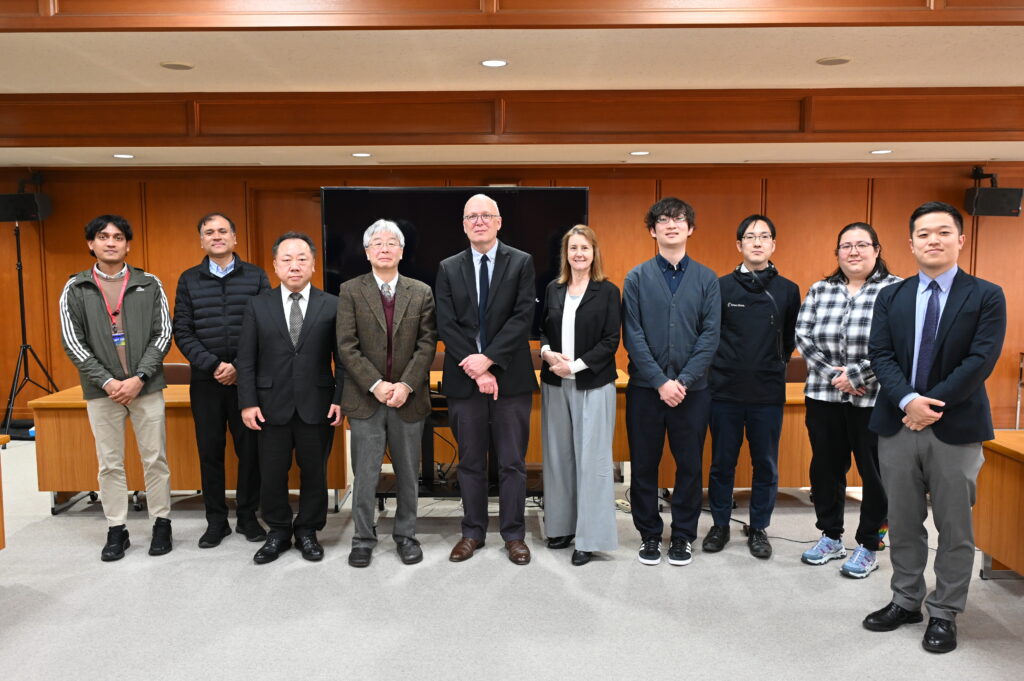
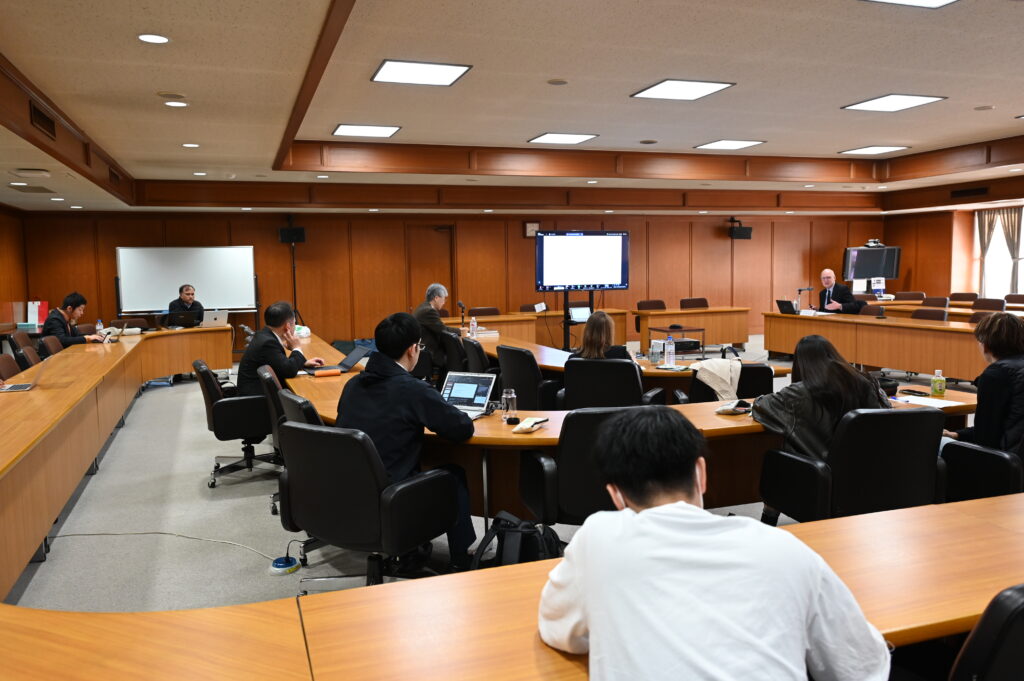
On Wednesday, April 16, 2025, at 15:30, a lecture entitled “Karmic Detectives: Reflections on Buddhist Historiography in China” was given in the large conference room on the second floor of the West Hall Building on the university’s Omiya Campus. The lecturer was Professor John Kieschnick (Stanford University).
The lecture discussed the concept of “Buddhist historiography,” its uniqueness and development, and particularly the transition from traditional Buddhist historiography to modern academicism in China. First, contrary to Edward Conze’s famous view that “the Dharma itself has no history,” Professor Kieschnick argued that Buddhism does have its own unique understanding of history, which arises from the existence of the Buddhist reincarnation-based view of time and the concept of mappō.
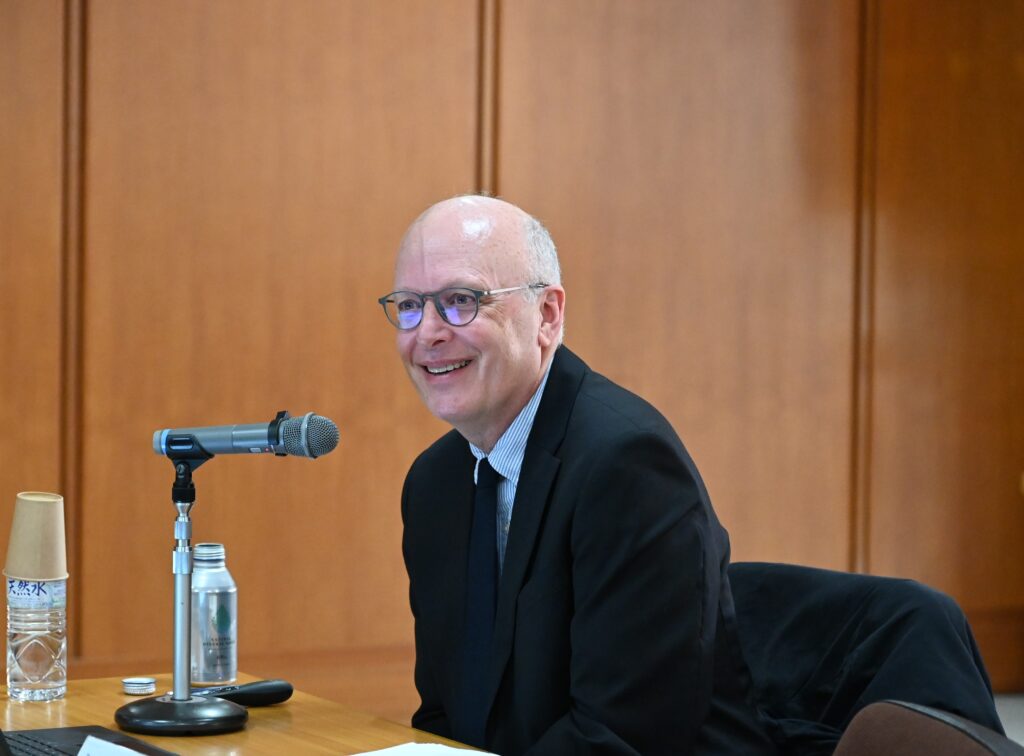
In his lecture, the term “karmic detective” was used to introduce the methods used by pre-modern Buddhist historians to interpret the past based on the principle of karma. They attempted to identify the traces of karma in scriptures, precepts, biographies, miracle stories, and stories of rebirth, and to find moral order and religious meaning within history.
However, in the 20th century, modern historiography emerged in China, led by Hu Shih, Gu Jiegang, and Fu Sinian. Thus, critical thinking and academic methods became necessary even in Buddhist history research. As a result of this new trend, Buddhist monks found themselves dealing with a conflict between their traditional religious viewpoint and historical criticism.
The lecture focused particularly on Taixu, a leading reformer of modern Chinese Buddhism, and his leading disciple Yinshun. Taixu had a Buddhist perspective on world history, so he continued to rely on the conventional interpretations of historical documents and stories of miracles. He can thus be called “the last karmic detective.” On the other hand, Yinshun actively adopted the methodology of modern historiography. He attempted innovative methods not previously seen in Buddhist historiography, such as criticizing the sources of Buddhist scriptures, revising the Buddhist calendar, and taking a skeptical view of legendary figures (such as Bodhidharma).
In the preface to his 1954 work, “Researching Buddhism with Buddhism,” Yinshun proposed the possibility of applying Buddhist doctrines such as “impermanence,” “non-self,” and “dependent origination” to historical research, and viewed historical descriptions as part of self-cultivation, rather than simply as records. This viewpoint suggests new possibilities for incorporating Buddhist thought into historiography.
The lecturer concluded by stating that Buddhist historiography is not simply a record of facts but is also an attempt to reinterpret history based on Buddhist values and viewpoints, and that “although the karmic detectives are gone, their spirit of inquiry continues.”