[Report] “Tangut Buddhist Texts: State of the Field and Perspectives”
2025.06.05
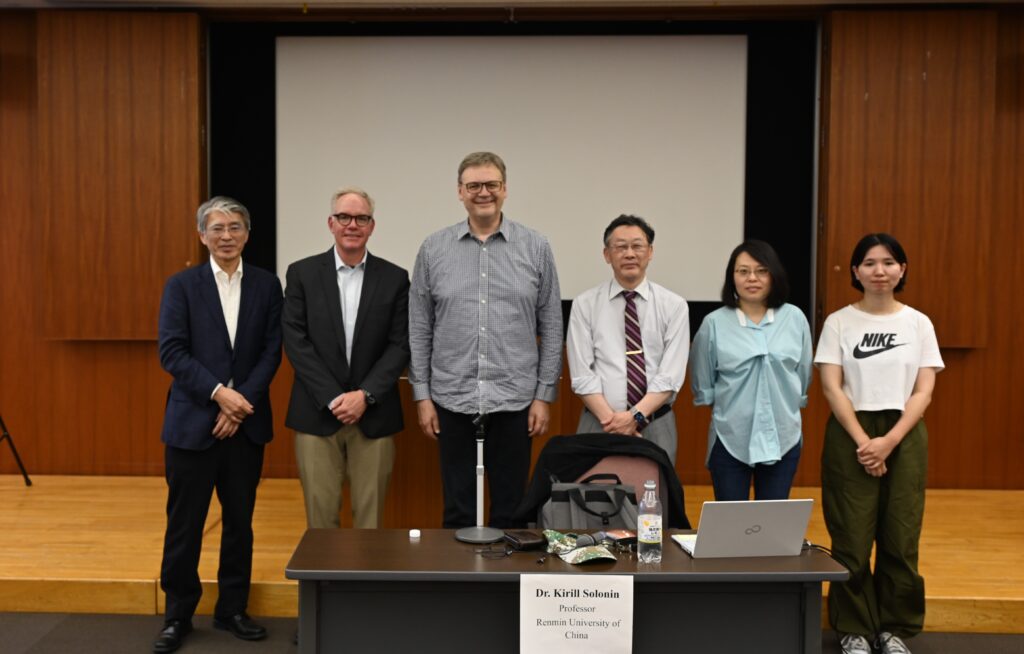
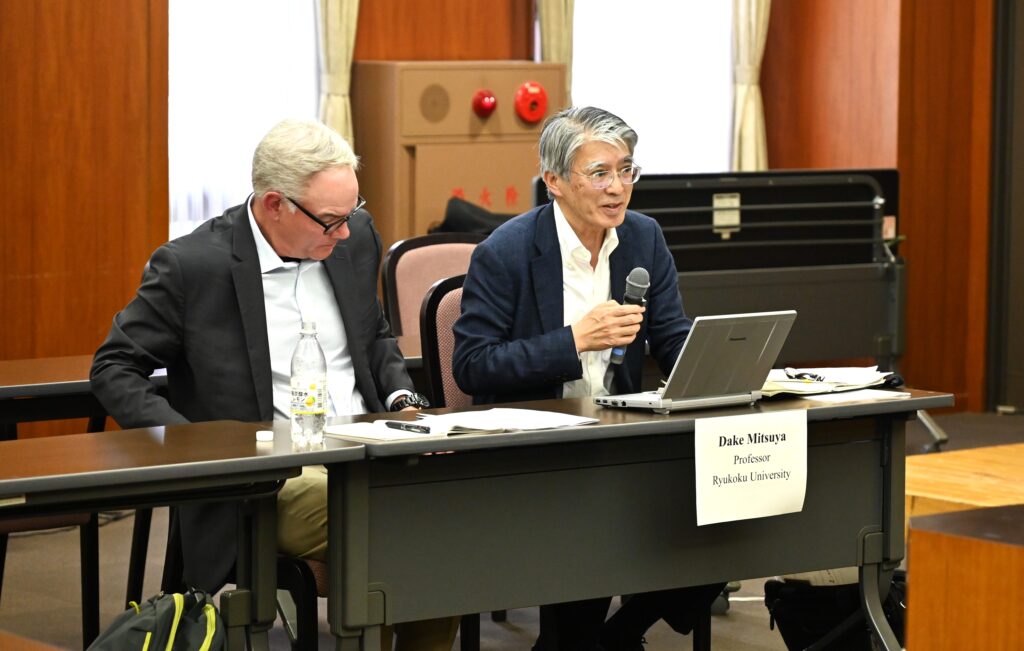
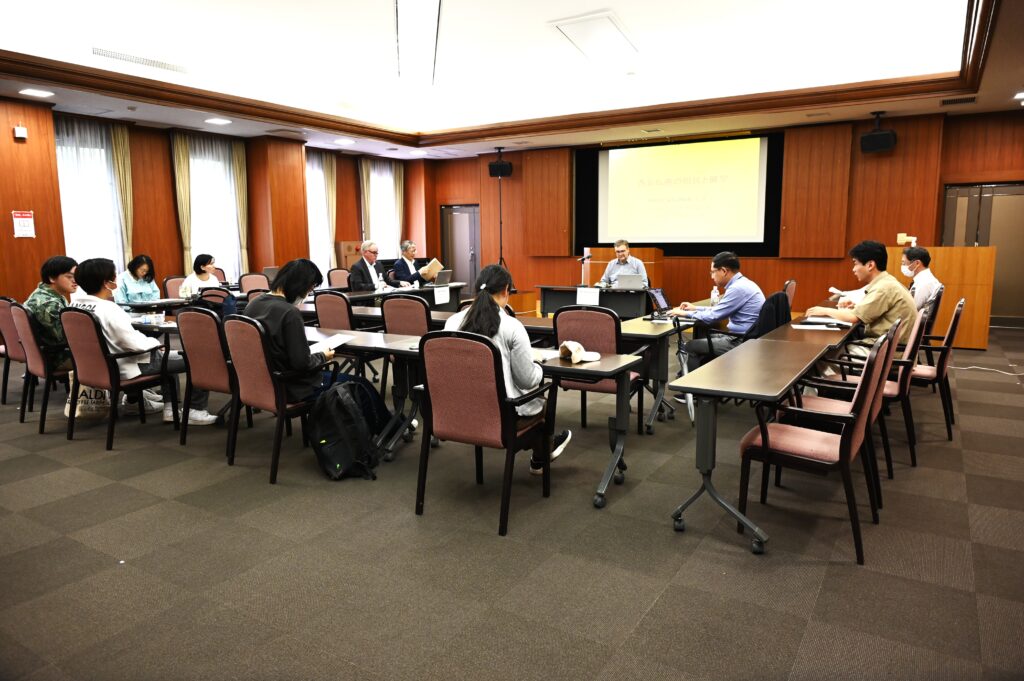
On Tuesday, May 27, 2025, at 15:15, an open study group entitled “Tangut Buddhist Texts: State of the Field and Perspectives” was held in the third-floor hall in the Seiwakan Building on the university’s Omiya Campus. Professor Solonin Kirill of Renmin University of China was the guest speaker. The study group was organized by the International Research Division of the Research Center for World Buddhist Cultures (RCWBC) at Ryukoku University.
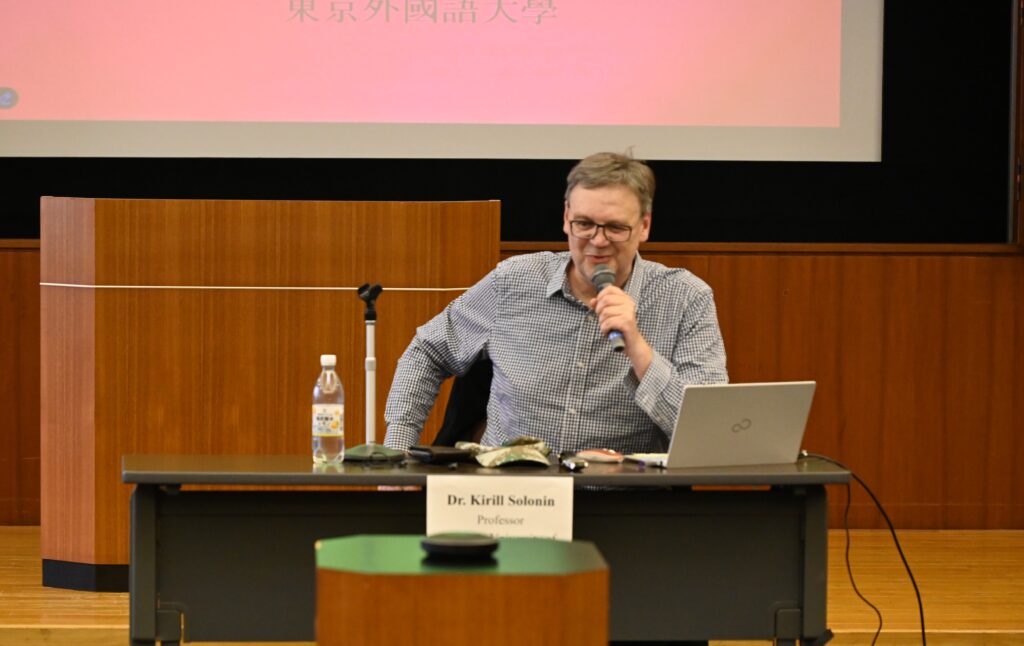
The study group discussed the Tangut Kingdom (10th to 13th centuries), which is known to have translated a large number of Chinese and Tibetan Buddhist texts using their own unique script, and which established Buddhism as a pillar of their national culture. The translation work was divided into two stages. Initially, it mainly involved direct translation from the Chinese. In the mid-12th century, however, new techniques were introduced by learned monks from Tibet and India, and the editing became more advanced. In particular, there are suggestions of the influence of the distinguished Kashmiri monk, Jayananda.
This cultural reform was not limited to Buddhist texts but also extended to secular literature and poetry. Monks were required to have a knowledge of phonology, and the Buddhist scriptures list the following as essential subjects of study for them: Prajñā (Perfection of Wisdom), Madhyamaka (Middle Way), Yogācāra (Consciousness-Only), Huayan (Flower Garland), Hundred Dharmas, Bodhicitta (Arousing the Aspiration for Enlightenment), and Dharma Rites. In particular, the distinction between the Han Buddhist tradition and the Tibetan Buddhist tradition is considered to reflect the language used and social affiliations rather than the source of doctrine.
Tangut Buddhist texts incorporate elements of both Chinese and Tibetan Buddhist traditions. It is philosophically conservative and is characterized more by its method of compilation and translation than by its content. It is classified into “textual clusters” that often contain sets of core sutras, commentaries, ritual texts, and records of transmission. Their composition varies depending on the sect (such as Huayan, Zen, and Yogācāra) and geographical background.
The Tibetan tradition includes the Five Great Dharani Sutras (Pancaraksha), A Guide to the Bodhisattva’s Way of Life, and the Mahāmudrā texts, the latter of which also includes works unique to the Tangut. In particular, The Essential Compendium of the Ultimate Mahāmudrā by National Preceptor Dehui is a representative example of the uniqueness of Tangut Buddhism. Also, some documents that were transmitted from Tibet are not found in existing Tibetan documents, so research on Tangut Buddhism can provide supplementary material for Tibetan Buddhism.
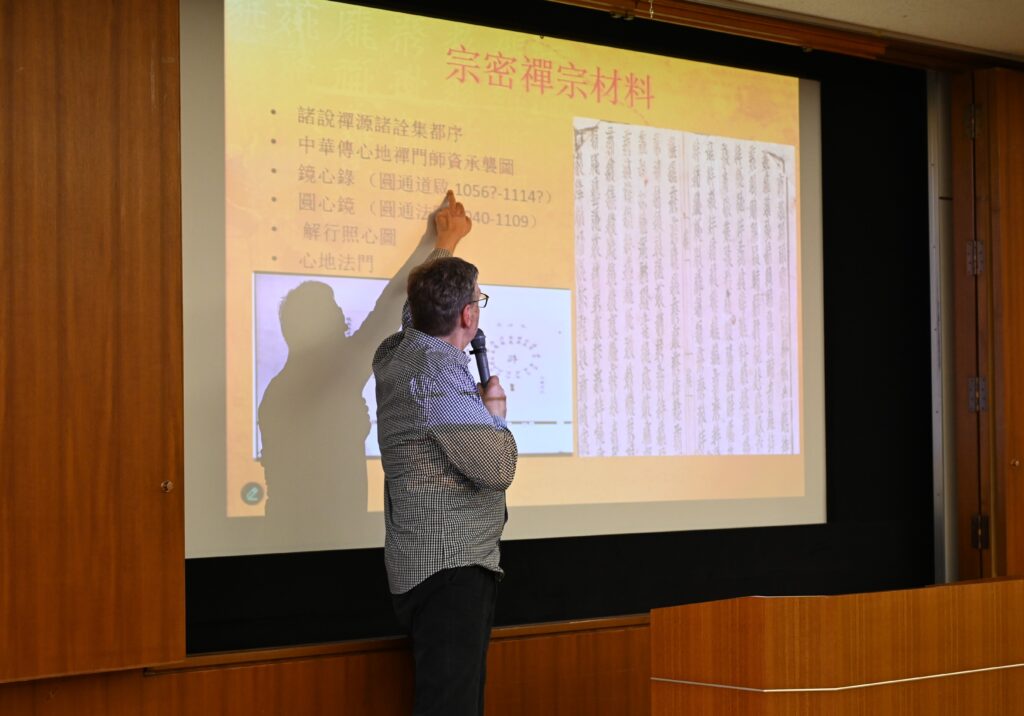
The distribution of these documents was closely related to the political changes in northern China in the 11th to 13th centuries (i.e., the transition from the Liao dynasty to the Jin dynasty). The influence of Southern Song dynasty Zen Buddhism also spread to the Tangut. Research into Tangut Buddhist texts provides crucial evidence for understanding the regional development of Chinese and Tibetan Buddhism at the time, and the dynamics of the transmission of Buddhist thought.