[Report] International Academic Lecture: “Sacred geography in Bactria and Sogdiana: some cases from the Greek Period (? – ca. 145 BCE) to the 8th century”
2025.06.26
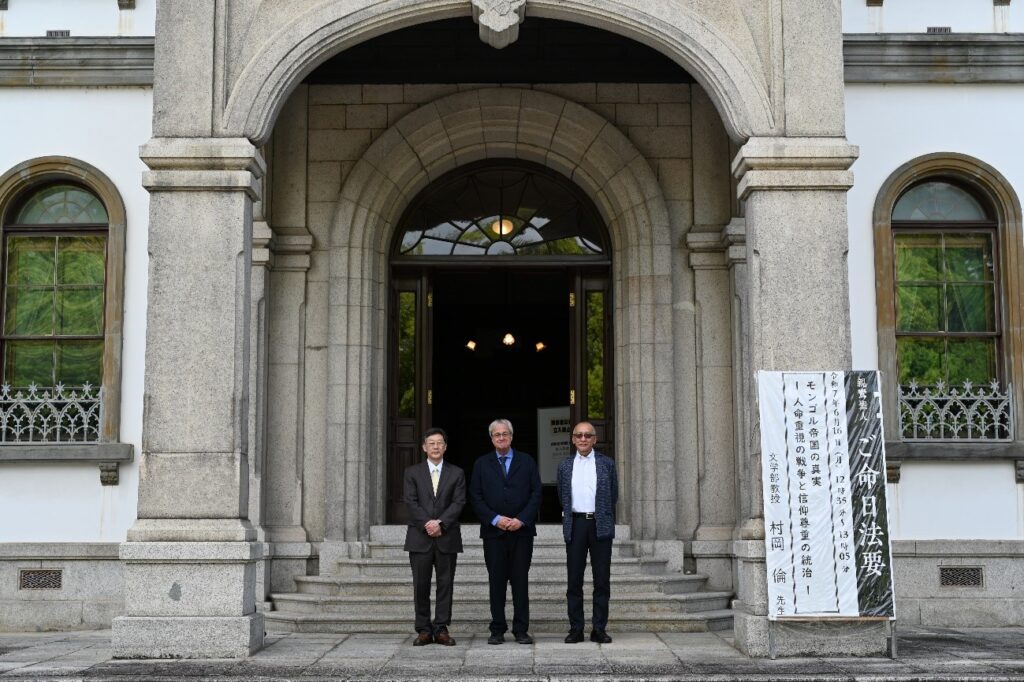
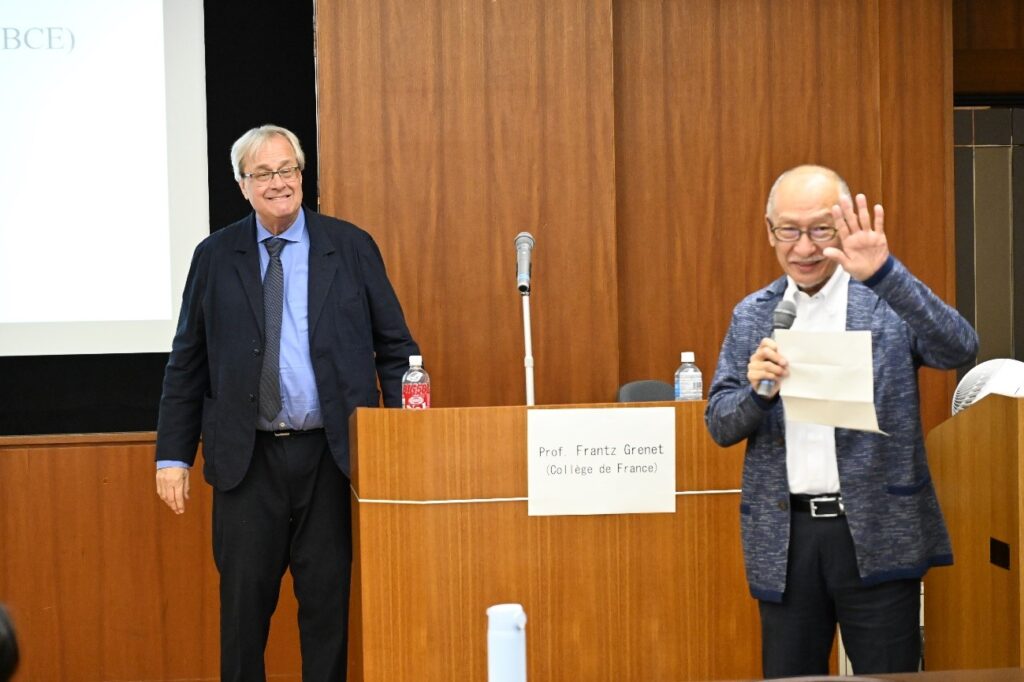
On Thursday, June 12, 2025, an international academic lecture was held on Ryukoku University’s Omiya Campus, sponsored by the Basic Research Division of the Research Center for World Buddhist Cultures (RCWBC). The lecture was co-hosted by the 2025 Joint Research Group on the “Socio-economic foundations of ancient traffic in Inner Asia based on Chinese and non-Chinese sources” at the Institute for Research in Humanities, Kyoto University. The speaker was Professor Franz Grenet (Collège de France / Académie des Inscriptions et Belles-Lettres), a leader in French Central Asian archeology for many years. His lecture was entitled “Sacred geography in Bactria and Sogdiana: some cases from the Greek Period (?-ca. 145 BCE) to the 8th century.”
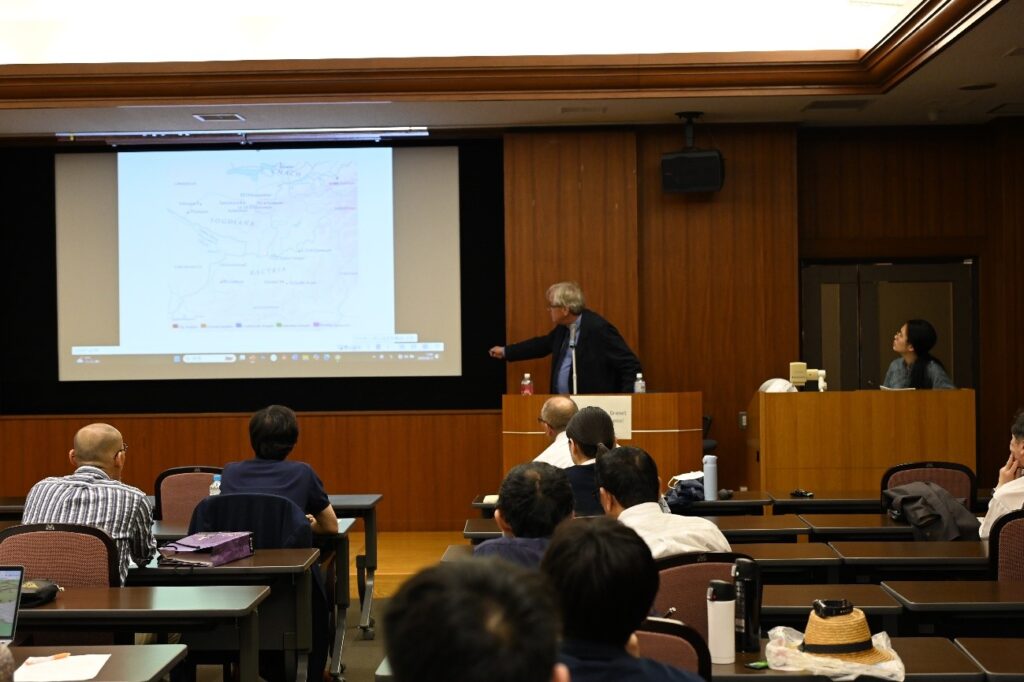
On the day, Professor Mazumi Mitani of the Faculty of Letters at the university served as moderator, and Professor Minoru Inaba of the Institute for Research in Humanities, Kyoto University, introduced the lecturer. In his lecture, Professor Grenet utilized the results of archaeological surveys of non-Buddhist ruins in the Central Asian region, particularly in the areas known as Bactria and Sogdiana, covering the period from the time of Greek rule to the spread of Islam. He selected 16 ruins presumed to be temples as well as a few examples confirmed by written sources and presented a hypothesis regarding the classification of these temples.
Lecture Summary
In the period leading up to the spread of Islam in the region, Bactria and Sogdiana were associated with Buddhism, as can be inferred from the names of people involved in the translation of Buddhist scriptures into Chinese. In reality, however, Buddhism in Bactria coexisted with other religions, namely Zoroastrianism, which was unique to the region. On the other hand, Buddhism had not taken root in Sogdiana, so in addition to Buddhist ruins, non-Buddhist temple ruins have been discovered in the region. For convenience, the temples in this region are divided into the following five categories.
(1) Large temples in cities
(2) Dynastic temples
(3) Multi-country temples
(4) Small suburban temples
(5) Hunting sanctuaries
In reality, common elements can be seen across these temple ruins, and not all of them can be clearly classified. However, the ruins discussed in this lecture exhibit a scale and urban structure corresponding to these five categories.
Among the temple ruins, those related to religion are particularly noteworthy. Zoroastrianism, which was the state religion of Iran, is known for prohibiting religious images. However, Zoroastrianism in Bactria and Sogdiana differed from that in Iran in that religious images were incorporated. Additionally, religious images showing the influence of Hinduism have been found, suggesting that religious beliefs unique to this region were practiced here. In particular, the god Shiva in Hinduism was identified with the god Vayu in Zoroastrianism, creating a situation not unlike the syncretism of Shinto and Buddhism in Japan. In these regions, Shiva is called Vesh or Veshparkar, both of which are derived from the name Vayu. Additionally, artifacts related to the goddess Nana, believed to trace back to Southwest Asia, have also been excavated from these ruins, revealing the diversity of religions before the spread of Islam.
It is also significant that some of the religious rituals inferred from the artifacts excavated here are attested to in related descriptions found in Chinese historical sources. It has been pointed out that when interpreting the results of such archaeological surveys, it is essential to conduct interdisciplinary research utilizing knowledge not only from the Central Asian archaeological context, but also from Oriental Studies.
Note that during the subsequent question and answer session, it was emphasized that despite the long period during which the area was subject to Greek rule, the excavated materials show almost no influence of Greek religious or spiritual culture.